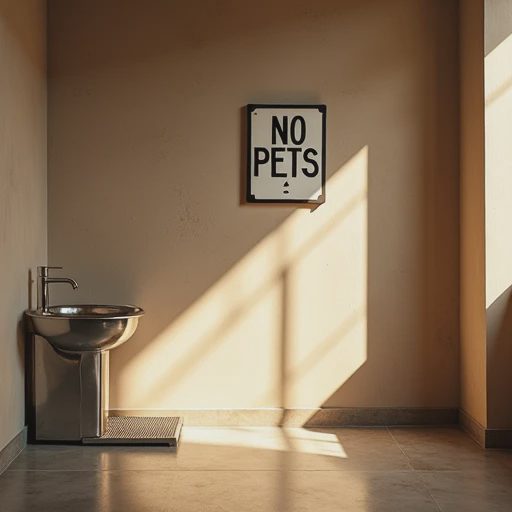
A few years ago I showed an apartment in a building that stated “no pets” in every listing and every email.
The unit itself was fine. What stopped me in the hallway was the small room on the ground floor with a tiled floor, a hose, a drain, and a sign that said “Pet Wash.” Someone had clearly designed and paid for a dedicated dog-washing station in a building that claimed not to allow dogs.
That contradiction is why I started keeping a private checklist.
Listings lie in both directions. Some say “pets welcome” and mean “we will consider it if the dog is under 15 pounds and you pay extra.” Others say “no pets” and still have infrastructure, staff attitudes, and resident populations that tell a different story. After enough of these mismatches, I stopped treating the written policy as the whole picture and started scoring buildings on how they actually function for people with animals.

The Pet-Ready Building Score (my working version)
I rate each building I show on a handful of practical factors. It’s not scientific and it’s not public. It’s simply the set of questions I ask myself so I can give clients a clearer picture than the listing provides.
1. Written policy vs. observed reality
Does the building say no pets while having dog runs, wash stations, or a noticeable number of resident dogs? Or does it say pets welcome while enforcing tight breed and weight limits that exclude most animals? The gap between paper and reality is often the most useful data point.
2. Entry and exit logistics
Is there a workable way to get a wet or muddy dog in and out without trailing through a formal lobby every time? Service elevators, side entrances, or at least a tolerant doorman make daily life easier than a single grand entrance with white carpet.
3. Staff attitude
Doormen, supers, and porters see everything. A building where the staff greet dogs by name or calmly accept the presence of animals is different from one where every dog is treated like a potential complaint. I pay attention to how staff speak about pets when the owner isn’t listening.
4. Elevator and hallway reality
Narrow hallways, slow elevators, and long waits create friction for dogs that need frequent trips outside. Buildings with multiple elevators or a culture of patience score higher than ones where every ride feels like a negotiation.
5. Nearby green space and relief options
A beautiful apartment is less functional if the nearest usable patch of grass or dog run is a stressful fifteen-minute walk away. I factor in actual walking distance to places a dog can reasonably eliminate or move freely.
6. Resident mix
Buildings that already have a visible population of dogs tend to be more stable for new pet owners. The social norms are already set. Buildings with almost no animals can go either way — sometimes more flexible, sometimes more easily disrupted by the first few dogs.
7. Management responsiveness
When issues arise (noise complaints, accidents in common areas, questions about deposits), does management handle them proportionally or escalate immediately? Past patterns matter.
I don’t add these into a public number. I use them to decide how hard to push on a particular building and how honest to be with the client about the daily experience.
What the dog-wash room taught me
That “no pets” building with the wash station had clearly allowed dogs at some point — or had been built by someone who assumed they would. The policy had tightened, but the infrastructure remained. In practice, a few residents still had dogs, the staff were used to them, and the wash room was not decorative.
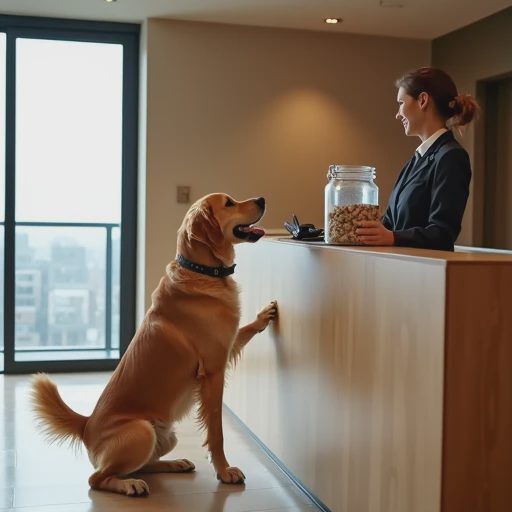
We were able to have a more grounded conversation with management because the building itself provided evidence that dogs were not a foreign concept. The written “no” was real, but it was not the entire story.
This is why I tell clients to look past the headline policy. A building that scores well on logistics, staff attitude, and existing dog culture is often worth a careful inquiry even if the listing says no. A building that says yes but scores poorly on the practical factors can still make daily life harder than it needs to be.
How to use this yourself
You don’t need my exact list. You can make a short version the first time you visit a building:
What do I actually see and hear regarding dogs?
How hard will the daily in-and-out be?
Do the people who work here seem accustomed to animals?
Is there usable outdoor space nearby?
Does the written policy match the physical and social reality?
Those five questions already put you ahead of most applicants who stop at “pets welcome” or “no pets.”
The score is not about finding a perfect building. Perfect buildings are rare. It is about noticing which places are set up — by design or by accident — to make living with a dog or cat more workable, and which ones will create friction at every turn.
The dog-wash room is still one of my favorite examples. Someone spent money on a hose and a drain in a building that claimed to forbid the animals those things were built for. The paperwork said one thing. The tile and the plumbing said another.
I pay attention to both. You should too.
— Maren
A home that fits all of you — tail included.


No notes yet — write the first one.