When Noodle comes home from a Brooklyn sidewalk with a scraped paw, I want two things: a clean towel and a calm plan. Choosing an antiseptic for dogs can help with a minor surface wound, but the wrong product can sting, delay healing, or be dangerous if licked. Here is the practical version I share with renters and their pets: clean gently, prevent licking, and know when a tiny-looking injury needs professional care.
What antiseptic for dogs actually means
An antiseptic is a substance used on skin to reduce bacteria. It is not the same as an antibiotic, which is a medication used for certain bacterial infections, and it does not replace stitches, pain control, or veterinary treatment. For a small scrape, many veterinarians commonly recommend a gentle saline rinse first. A properly diluted chlorhexidine solution can also be appropriate for some external skin problems, but the concentration and location matter.
That last point is important in a small apartment. A product that is acceptable on intact or lightly irritated skin may be unsafe near the eyes, inside the ears, in the mouth, or on a deep puncture. A dog can turn a quick paw cleanup into a licking marathon before you have even found the leash. Keep the bottle label, your vet's instructions, and your dog's weight in mind rather than guessing from a human first-aid product.
For a basic home kit, I like sterile gauze, clean towels, a blunt-tip pair of scissors, disposable gloves, and a vet-approved rinse. Store everything in a sealed container away from Noodle's treat drawer. Hydrogen peroxide and rubbing alcohol are poor default choices because they can irritate healthy tissue and slow wound healing. Tea tree oil and other concentrated essential oils can be toxic when swallowed or absorbed.
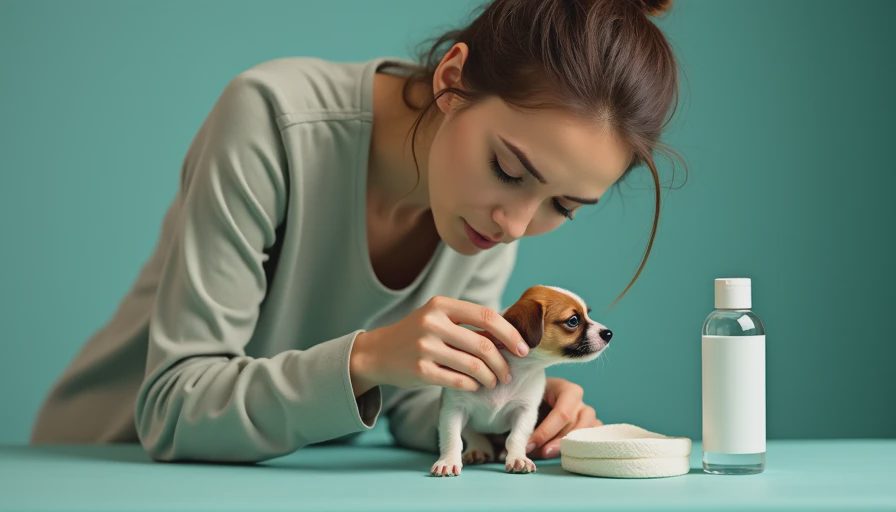
How to clean a minor scrape safely
Start by moving your dog to a quiet, well-lit spot. In a walk-up, that might be the bathroom floor or a folded blanket near the kitchen rather than the busy hallway. If the dog is frightened, muzzle-shy, or trying to bite, do not force the process. A painful animal can react unpredictably, even if it is normally gentle.
Wash your hands, then look at the injury without pulling off stuck debris. Flush a small scrape with sterile saline or clean lukewarm water. Let the liquid run over the area instead of scrubbing. Pat around the wound with gauze, not a fluffy cotton ball that can leave fibers behind. If your veterinarian has specifically recommended an antiseptic for dogs, use it exactly as directed and never make a stronger mixture because it seems more effective.
After cleaning, prevent licking. A cone, inflatable collar, recovery sleeve, or supervised short rest can work depending on the location. Do not wrap a paw tightly; swelling and trapped moisture create new problems. Take a clear photo before and after cleaning so you can compare redness, swelling, and discharge over the next day. In a rental, this also helps you avoid repeatedly disturbing a nervous dog while neighbors are coming and going.
Products to avoid and places that need extra caution
Many household medicine-cabinet products are not automatically safe for pets. Avoid phenol-containing cleaners, concentrated disinfectants, bleach, ammonia, undiluted iodine, rubbing alcohol, and hydrogen peroxide unless a veterinarian gives specific instructions. Never apply a skin product containing pain-relieving ingredients such as lidocaine or benzocaine without veterinary guidance. Dogs lick their feet, and swallowed topical products can cause trouble even when the skin looks fine.
Eyes, noses, mouths, genital areas, and deep folds require special care. A chlorhexidine product made for skin should not be poured into an eye. Ear problems also need an ear-specific cleaner and an examination, particularly if there is odor, head shaking, pain, or discharge. If a product gets in the eye, flush with clean water or sterile saline and call a veterinarian or poison-control service for guidance.
The phrase antiseptic for dogs on a package does not guarantee that every version is right for every wound. Read whether the product is labeled for dogs, whether it must be diluted, and whether it is intended for skin or another body area. A local veterinarian, including a clinic near your subway stop, can tell you which formulation belongs in your home kit.
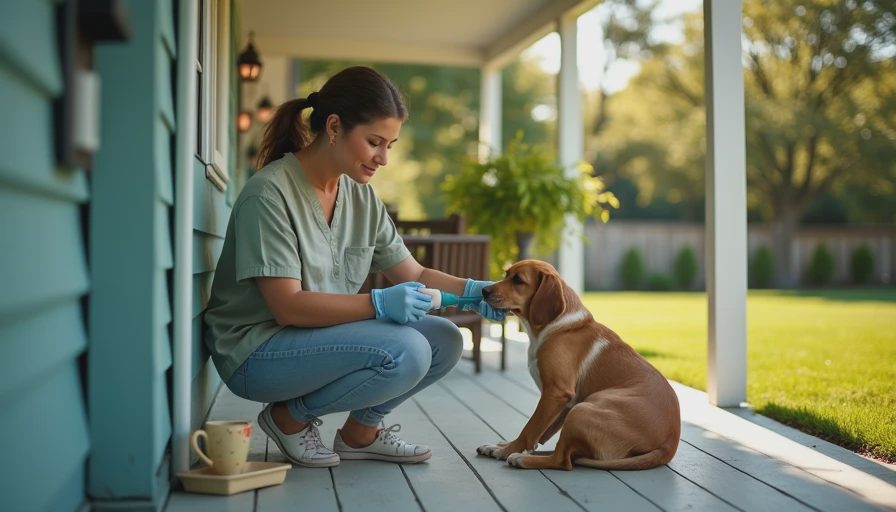
When a scrape is not a home-care problem
Skip home treatment and contact a veterinarian promptly for a deep cut, puncture wound, bite, embedded glass, uncontrolled bleeding, exposed tissue, a missing nail, or an injury near the eye. Punctures can look tiny while carrying bacteria deep under the skin. A dog that will not bear weight, cries when touched, becomes unusually quiet, or has rapidly increasing swelling also needs an examination.
Watch for worsening redness, heat, pus, a bad smell, persistent bleeding, or a wound that opens again. Fever, vomiting, weakness, facial swelling, or breathing changes are urgent signs. If you are unsure, call your regular clinic, an urgent-care veterinarian, or a pet poison service. Photographing the product label and the wound can make the phone conversation faster.
For city dogs, location changes the logistics. A paw injury on a Friday evening may mean calling an urgent-care clinic before attempting stairs, a crowded dog run, or a long walk to the subway. Keep a rideshare-friendly carrier or washable blanket handy, and save the nearest emergency clinic in your phone before you need it.
Building a dog first-aid routine in a rental
The best antiseptic for dogs is only useful if you can find it quickly and use it correctly. Put the kit on a high shelf, label it clearly, and check expiration dates every few months. Add your vet's phone number, your dog's medication list, vaccination information, and a recent photo. If a pet sitter or roommate shares the apartment, write down the simple instruction: rinse minor surface injuries, do not improvise with household chemicals, and call for help when the wound is deep or worsening.
After a walk along Bedford Avenue, Prospect Park, or any block with broken pavement, glance at the pads before settling in. Look for burrs, salt residue, cracks, and small cuts. A rinse with plain water can remove street grit; drying between the toes helps prevent damp irritation. Avoid turning every red spot into a product experiment. Sometimes the right move is rest, observation, and a call to the vet.
You can also make treatment less stressful with practice. Touch each paw briefly, reward calm behavior, and stop before your dog struggles. This is especially helpful in an elevator or narrow bathroom, where there is little room to reposition. A cooperative dog makes safe cleaning easier for everyone.
A simple decision checklist
For a clean, shallow scrape with little bleeding, rinse gently, use only a veterinarian-approved antiseptic for dogs if instructed, and monitor closely. For a wound with dirt that will not flush away, call your clinic rather than digging at it. For a bite, puncture, deep cut, eye injury, or severe pain, arrange veterinary care promptly. For possible chemical ingestion or a reaction after applying a product, contact a veterinarian or poison-control service right away.
If you rent, keep the routine realistic: a washable mat by the door, a towel near the sink, and supplies stored where a curious terrier cannot reach them. Good pet care does not require a giant apartment or a bathroom dedicated to the dog. It requires a small plan, safe supplies, and the confidence to stop home treatment when the situation is beyond a scrape.
That is how I approach antiseptic for dogs with Noodle: gentle cleaning for minor problems, no kitchen-cabinet chemistry, and a low threshold for calling the professionals. A home that fits all of you — tail included — should also make room for a sensible first-aid plan.




No notes yet — write the first one.