
One of the most confusing (and expensive) parts of renting with a pet in New York is the money conversation that happens after you’ve already fallen for the apartment.
You’ll hear two phrases over and over: “pet deposit” and “pet rent.” They sound similar. They’re not. And landlords sometimes use them in ways that are perfectly legal… and sometimes in ways that are just hopeful.
Here’s the clear version I give every client.
First, the basic difference
Pet deposit
A one-time fee, usually collected at lease signing, meant to cover potential damage caused by the pet. In theory, if your dog or cat doesn’t damage anything, you should get this money back when you move out (minus any legitimate deductions).
Pet rent
A recurring monthly charge added to your rent for the privilege of having a pet. This money is almost never refundable. It’s simply extra income for the landlord.
Some buildings charge one. Some charge both. Some charge neither. The important part is knowing which is which — and what the landlord is actually allowed to do.
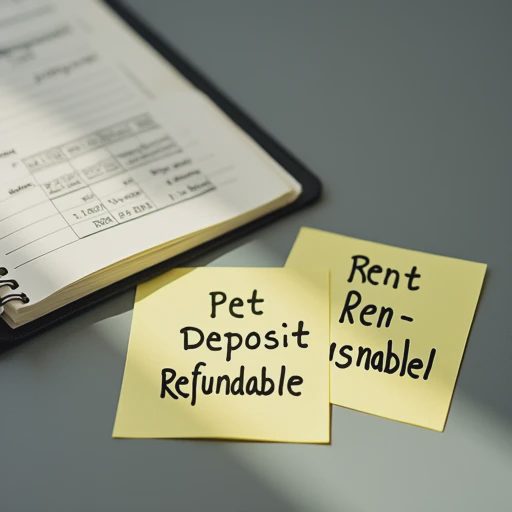
What’s generally allowed in New York
For market-rate apartments (the majority of what most renters are looking at), landlords have a lot of flexibility. They can charge a pet deposit, monthly pet rent, or both. There is no city-wide cap that says “you may only charge $X.”
That said, a few practical realities still apply:
The regular security deposit is still limited to one month’s rent in most cases. A pet deposit is separate and additional.
Whatever they charge should be clearly written in the lease. Verbal promises (“we’ll waive it if the dog is good”) are not reliable.
Extreme or surprising amounts are worth questioning. If a landlord suddenly asks for a $2,000 pet deposit on a $2,800 apartment after you’ve already applied, that’s a yellow flag — not necessarily illegal, but worth pushing back on.
For rent-stabilized apartments the rules are tighter, and pet fees are less common (and more scrutinized). If the listing or the agent mentions the apartment is stabilized, ask specifically about any pet-related charges before you get too attached.
What I see landlords try that you should push back on
These aren’t always illegal, but they are often negotiable — or at least worth clarifying in writing:
Calling it a “pet deposit” when it’s clearly non-refundable If they say the money is a deposit but also say you won’t get it back under any circumstances, that’s just a fee with a nicer name. Ask them to put the refund terms in the lease.
Adding pet rent after you’ve already paid the application fee or deposit This happens more than it should. Once numbers are agreed upon, sudden new monthly charges feel like a bait-and-switch. It’s reasonable to say: “We discussed the total monthly cost before I applied. Can we stick to those numbers?”

Charging both a high pet deposit and high monthly pet rent Some landlords do this. It’s legal in many cases, but it’s also a sign the building is not especially pet-friendly in practice. You’re paying a premium for the privilege of living there with your animal.
Vague “pet fees” with no breakdown Always ask for the exact split: How much is the one-time charge? How much is monthly? Is any of it refundable?
The questions I teach people to ask early
Before you fall in love with the light or the kitchen, send something like this:
“Could you confirm any pet-related fees for this apartment? Specifically:
– Is there a one-time pet deposit, and is it refundable?
– Is there monthly pet rent, and how much?
– Are these amounts the same for dogs and cats?
Thank you — I want to make sure I understand the full monthly cost.”
A clear answer tells you a lot about how the building actually operates. A vague or delayed answer tells you something too.
A small reality check
In a competitive market, some landlords use pet fees as a quiet filter. They know many renters will walk away when they hear “$75 a month pet rent.” That doesn’t mean you should automatically walk. It does mean you should run the real numbers: the advertised rent + pet rent + any other fees = your actual housing cost.
I’ve seen clients successfully negotiate lower pet rent or a reduced deposit, especially when the dog is small, older, or the apartment has been sitting. It’s not guaranteed, but it’s more common than most people think — if you ask calmly and early.
You don’t have to accept every fee at face value. You also don’t have to assume every landlord is trying to take advantage. Most are simply trying to protect their property and increase their income. Your job is to understand exactly what you’re being asked to pay, and decide whether the apartment is still worth it once the real numbers are on the table.
Next up we’ll talk about what to do when the answer is a flat “no pets” — and the email that sometimes softens it.
Until then,
Maren
A home that fits all of you — tail included.

No notes yet — write the first one.