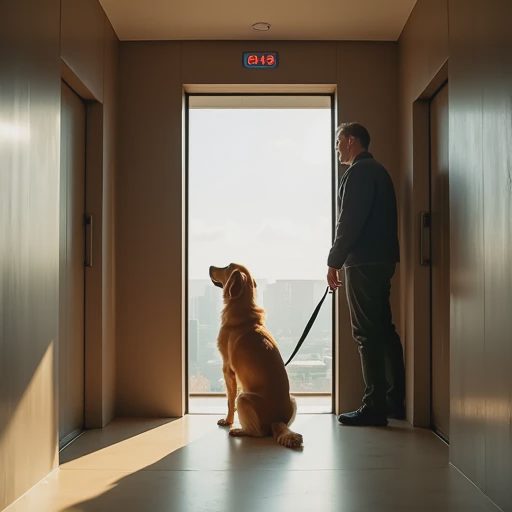
When I first moved into a building with a real elevator, I assumed Noodle would figure it out the way he figured out everything else — by charging forward and improvising.
He did not.
The first time the doors closed, he flattened himself against the back wall, refused to move, and gave me a look that clearly said, You have betrayed me in a metal box. We rode three floors in complete silence while an older man with a grocery cart politely pretended nothing strange was happening.
If you live in a walk-up, you can skip this. If you live in (or are about to move into) a building with elevators and a dog who finds them suspicious, here’s the exact process that eventually worked for us. It’s slower than most internet advice suggests, and it was worth every extra day.
Week 1: Make the elevator boring
Goal: Change the emotional association from “trap” to “nothing important happens here.”
We went to the elevator lobby at quiet times (mid-morning or early afternoon).
I pressed the button, let the doors open, and just stood there with Noodle on a short leash. No entering.
The moment the doors started to close, we walked away.
Treats happened for calm standing near the open elevator, never for panicked behavior.
We did this for five or six short sessions. By the end of the week he would sit next to me while the doors opened and closed without trying to back up. That felt like a major win.
Week 2: One step in, one step out
Goal: Prove that entering does not mean being trapped forever.
Same quiet times.
Step one paw in, mark and treat, then immediately step back out before the doors closed.
Gradually increase to two paws, then all four paws, still exiting before the doors moved.
If he hesitated, we ended the session on the last successful step instead of pushing.
The key was ending while he was still willing. A lot of training advice skips how important that is with a worried dog.
Week 3: Short rides with an exit strategy
Goal: Experience the full cycle in the least scary way possible.
We started riding only one floor, preferably down (for some reason down felt less intense for him).
I stood between Noodle and the door so he couldn’t make a sudden exit attempt.
The second the doors opened, we walked out calmly and had a small party in the hallway — soft voice, treats, then a short walk outside.
We avoided rush hours completely. One stressed dog + five strangers with bags is not a training environment.
By the end of the week he would get on, but he still glued himself to my leg. Progress, not elegance.
Week 4: Building duration and neutrality
Goal: Make the ride itself uneventful.
We increased to two or three floors.
I stopped treating during the ride and only rewarded after we exited calmly.
I began riding with other people present (still avoiding peak times).
If another dog got on, we got off at the next floor. No forced elevator meet-and-greets yet.
This was the week he finally stopped panting the entire time. His body softened. That mattered more than any single “obedience” behavior.
Week 5–6: Real life starts to look normal
Goal: Integrate elevator use into ordinary routines.
Morning leash-up now included an elevator ride as the default, not a special event.
We practiced waiting for the next elevator if the first one was crowded.
I added occasional longer rides (up to the top floor and back down) so the 20-floor reality stopped feeling novel.
We still avoided the most chaotic times of day when possible. Management of the environment is part of the training.
By the end of week six, Noodle would walk into the elevator, turn around, and sit. Not every time, but most times. When the doors closed he looked mildly bored instead of betrayed. That was the day I realized we had turned a corner.
What actually made the difference
Going much slower than I wanted to.
Protecting him from overwhelming situations instead of “socializing” him through them.
Ending sessions early while he was still successful.
Accepting that some days we would only practice standing near the elevator and that still counted.
I also learned to warn other passengers with a simple, “He’s still learning elevators — thanks for your patience.” Most people were kind. A few were clearly annoyed. Both reactions are part of city life with a dog.
If you’re starting this process
Your dog might move faster or slower than Noodle did. Some dogs are fine after three quiet rides. Others need a month. The timeline matters less than the direction.
If your building has two elevators, use the quieter one while you’re training. If your dog is especially sound-sensitive, consider a slight increase in distance from the mechanical noise at first (standing farther back in the car). And if progress stalls, drop back to the last step that felt easy instead of pushing forward.
Living on a high floor with a dog who trusts the elevator is genuinely nicer than the alternative. The first time Noodle walked on without hesitation and then looked at me like Well? Are we going? I felt disproportionately proud.
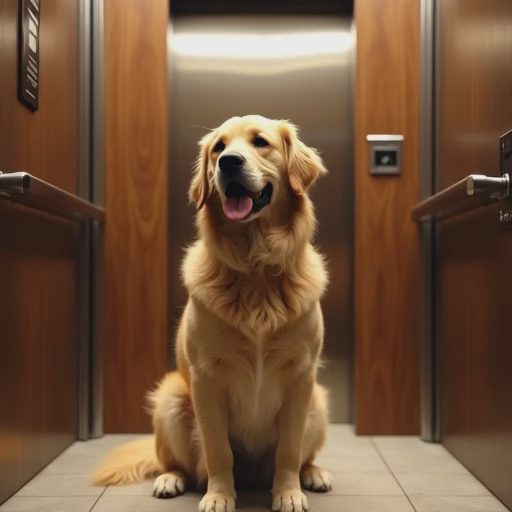
It’s a small city skill. But when you live in a vertical building, it’s one of the ones that makes daily life feel possible instead of constantly negotiated.
Happy to hear how it’s going for anyone else in the middle of this particular project.
— Maren
A home that fits all of you — tail included.
No notes yet — write the first one.